
Most people don’t avoid reading the Bible because they don’t care. They avoid it because they don’t know how. Maybe you’ve opened your Bible before and felt confused within minutes. Maybe you’ve tried reading plans and couldn’t keep up. Maybe you’ve heard people talk about “studying Scripture” and wondered what that even means. If that’s you, you’re not alone. I’ve been there too.
For a long time, I believed the Bible was important—I didn’t know how to engage with it in a way that actually made sense. I would try to read it, get overwhelmed (or bored), lose focus, and eventually give up. What I didn’t realize at the time was that the Bible isn’t meant to be rushed through or mastered all at once. It’s meant to be understood over time, as your relationship with the Lord deepens. And that starts with learning how to approach it. If you’re new to studying the Bible, here are some simple, practical steps to help you get started. Bible study for beginners does not have to be complicated; it starts with reading slowly, asking good questions, praying for understanding, and returning to God’s Word consistently.
Table of Contents
- Why Are You Studying the Bible?
- How Much of the Bible Should a Beginner Read Each Day?
- Where Should Beginners Start Reading the Bible?
- How Can Beginners Understand What They Read in the Bible?
- What Does It Mean to Let Scripture Interpret Scripture?
- Why Should You Pray before Studying the Bible?
- What Should You Do When the Bible Feels Confusing?
- Is It Better to Read More or Study More Deeply?
- How Do You Apply the Bible to Your Life?
- How Can Beginners Build a Consistent Bible Study Habit?
- What Is the Most Important Thing to Remember When Studying the Bible?
- Frequently Asked Questions about Studying the Bible for Beginners
- For Further Reading
Why Are You Studying the Bible?
Before you even open your Bible, it’s worth asking a simple question: Why am I reading this? Many of us approach Scripture to finish something—get through a plan, find quick answers, or check a box. But the Bible wasn’t given to us so we could complete it. It was given so we could know God. Instead of asking, “How much did I read today?” begin asking, “What did I learn about God?” This shift changes everything. Studying the Bible isn’t about performance—it’s about relationship. As Jesus said:
“And this is the way to have eternal life—to know you, the only true God, and Jesus Christ, the one you sent to earth.” - John 17:3, NLT
Knowing Him is the goal.
How Much of the Bible Should a Beginner Read Each Day?
One of the biggest mistakes beginners make is trying to read too much at once. You don’t need to read five chapters a day to grow. In fact, you’ll often get more out of five verses you understand than five chapters you rush through. Start small. Stay consistent. Growth doesn’t come from speed—it comes from returning to God’s Word again and again, one bite at a time.
Where Should Beginners Start Reading the Bible?
If you’re not sure where to start, that’s completely normal. The Bible is one story—but it’s made up of many books, written across different time periods and in different styles. Amazingly, those stories connect across centuries. It really is incredible. If you need a starting point, you might begin with:
- The Gospel of John to understand who Jesus is
- Genesis to see the beginning of God’s story
- Psalms to connect emotionally with God
- Proverbs for practical wisdom
There’s no perfect place to begin—begin. I find each of these books life-giving in its own way. You really can’t go wrong.
How Can Beginners Understand What They Read in the Bible?
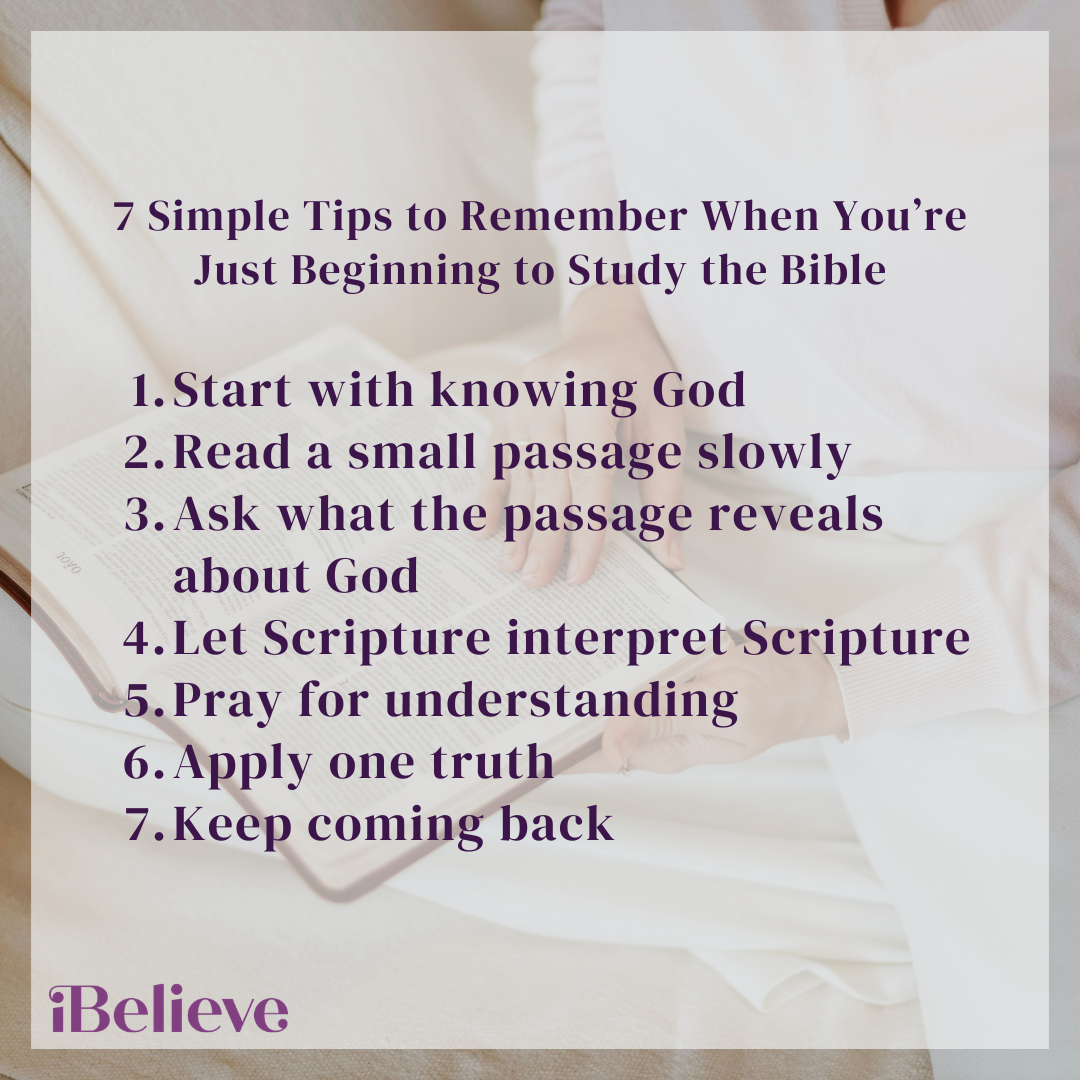
This is where Bible study truly begins. When you read, slow down. Pay attention. Ask simple questions:
- What is happening here?
- Who is speaking?
- What does this reveal about God?
You don’t need a theology degree—you need to be willing to pause and think. If something doesn’t make sense, that’s okay. You don’t need to understand everything in one sitting. Understanding comes with time. So many times, I’ve found clarity in one passage while reading another. Try using a study Bible with notes on each passage to guarantee clarity and meaning. There’s nothing quite like that moment when things begin to connect.
What Does It Mean to Let Scripture Interpret Scripture?
One of the most helpful truths to understand is this: the Bible explains itself. When something feels confusing, keep reading. Look at the surrounding verses. Notice repeated themes. Compare what you’re reading with other parts of Scripture. Instead of immediately turning to outside opinions, try sitting with the text first. Initially, you might feel like you don’t have the time to sit with the text—but trust me, you do.
Over time, as you become more familiar with God’s Word, you’ll begin to see how deeply connected it all is. I can honestly say—that’s where the Bible started to come alive for me. I love the moments when my eyes widen, and even my breath is taken away for just a moment. That’s how exciting it can be when you spend intentional time in God’s Word.
Why Should You Pray before Studying the Bible?
Before you read, take a moment to pray:
“God, help me understand Your Word.”
It doesn’t have to be long or formal. Just be honest. For a long time, I struggled to understand the Bible. I would read and feel like nothing was sticking. But when I finally asked God to help me understand—and meant it—things began to change. Not all at once, but gradually. Connections started to form. Scripture began to make sense. What once felt distant began to feel alive.cAs James writes:
“If you need wisdom, ask our generous God, and he will give it to you. He will not rebuke you for asking.” - James 1:5, NLT
God wants you to understand His Word—and He will help you when you sincerely seek Him.
What Should You Do When the Bible Feels Confusing?
There will be parts of the Bible that feel confusing, unfamiliar, or even frustrating. That’s normal. You are not expected to understand everything right away. Think of studying the Bible like learning a language. At first, it feels slow and difficult. But over time, with consistent exposure, things begin to click. Don’t let confusion stop you. Let it invite you to keep going. God does not hide the truth from those who earnestly seek Him. He teaches those who are willing to see it.
Is It Better to Read More or Study More Deeply?
You don’t need to cover large portions of Scripture to grow. Instead, focus on going deeper with what you read. If a verse stands out to you, sit with it. Pray about it. Revisit it. Ask: Why does this matter? What does this show me about God? How does this challenge the way I live? This is where transformation begins. Because, as Paul writes:
“Don’t copy the behavior and customs of this world, but let God transform you into a new person by changing the way you think. Then you will learn to know God’s will for you, which is good and pleasing and perfect.” - Romans 12:2, NLT
Real change happens when truth reshapes the way we think.
How Do You Apply the Bible to Your Life?
Studying the Bible isn’t just about gaining knowledge—it’s about allowing God’s truth to shape your life. As you read, stay open. Sometimes a passage will call you to change something. Sometimes it will remind you to trust. Other times, it may simply reveal something about who God is. And yes—sometimes you’ll read something like a genealogy and not know what to do with it. That’s okay too. God’s Word is meant to be lived, not just understood.
How Can Beginners Build a Consistent Bible Study Habit?
There will be days when you don’t feel like reading. Days when you feel distracted. Days when you don’t understand what you just read. That doesn’t mean you’re failing. It just means you’re human. The key is simple—keep coming back. Create a Bible study habit that works for you, in the season you are in, with the time you can give. Growth doesn’t happen in one perfect study session. It happens over time, through consistency, honesty, and a willingness to keep showing up.
What Is the Most Important Thing to Remember When Studying the Bible?
If you’re starting, don’t overcomplicate this. You don’t need the perfect plan, the perfect schedule, or the perfect understanding. You need to begin. Open your Bible. Read a little. Ask God for help. Stay curious and open. Over time, what once felt confusing will begin to make sense. And more importantly, you won’t just learn more about the Bible. You’ll begin to know the God who wrote it. And knowing Him is the gift we were created to hunger and thirst after.
Frequently Asked Questions about Studying the Bible for Beginners
- Where should a beginner start studying the Bible?
A beginner can start with the Gospel of John to learn who Jesus is, Genesis to understand the beginning of God’s story, Psalms for prayer and emotion, or Proverbs for practical wisdom. - How much of the Bible should I read each day?
Beginners do not need to read large sections at once. It is often better to read a smaller passage slowly, understand it, pray through it, and return consistently. - What should I do if I do not understand what I read?
Slow down, read the surrounding verses, ask simple questions, compare Scripture with Scripture, and pray for God to give you understanding over time. - Do I need a Bible study plan to start?
A plan can help, but it is not required. The most important thing is to begin with a humble heart, read consistently, and seek to know God through His Word. - How do I apply the Bible to my life?
Ask what the passage reveals about God, what it shows about people, what it calls you to believe or obey, and how it invites you to trust Christ more deeply.
For Further Reading
- How to Study the Bible and Grow Your Faith
- How Can I Get Started Reading the Bible?
- 9 Ways to Approach the Bible if You’re New to Studying Scripture
- Top 5 Places to Start Reading the Bible
- 7 Steps to a Deeper Understanding of the Bible
Photo credit: ©Unsplash/Gift Habeshaw


