

"You will keep him in perfect peace,
Whose mind is stayed on You,
Because he trusts in You."
-Isaiah 26:3 NKJV
I hate change, whether it’s a computer update, an unexpected health crisis, or new responsibilities. Change is rarely good and unwanted. Peace and change usually don’t appear in the same sentence as far as I am concerned.
Jesus Christ promised us His peace, but it seems like a rare commodity these days. How can we have peace when the world we live in seems to only become worse? Where is peace when your body lets you down, and you live in chronic pain? How do we find peace when we have to become caretakers for aging parents?
Isaiah gives us two ways to find peace and keep it alive, no matter how difficult life becomes. My picture of peace is a quiet morning with a cup of hot tea, but genuine peace shows up during life’s most challenging situations. That’s what helps us recognize it because peace in the storm is unexpected and unique.
I’ve heard peace described as a ravaging storm with a bird sitting on a tree branch singing as a divine light shines on him from heaven. I find that description true of what I have encountered at times.
When we look at our focal verse, we find two avenues to peace. One tells us to focus on God, and the other tells us to place our trust in God. Let’s examine both.
When you are navigating your season of unwanted change, what are you focusing on? Sweet friend, I am focusing on every problem it has caused and will cause going forward, as well as the frustration that accompanies it. I hate to admit it, but I take my eyes off Jesus, and just like Peter walking on the stormy waves, I sink into a sea of despair.
I have learned that I need to take my eyes off the problem and put them on God. That can prove difficult at times. When I was in tremendous physical and emotional pain, I struggled to take my mind off the pain. Reading the Bible gave me an escape from those thoughts. That’s why Isaiah tells us to stay focused on God. This wise prophet knew that a God-centered mind experienced the peace that transcends all understanding (Philippians 4:7).
Next, Isiah tells us to trust fully in God. When we have confidence in God, we will have peace. The problem, my friend, is doubt. It’s attacked us since the Garden of Eden. Doubt not only chisels away at our faith, but little by little, it diminishes our peace.
Trusting God isn’t always easy. I want to believe God will heal me when I pray, and I know He can, but when you’ve lived with chronic pain, illness, or a disability for many years, doubt creeps in.
Do we take our irritations about the changes at work or the computer updates to God? I muddle through these seasons without bothering my heavenly Father, but if I want peace instead of frustration, I must take it to God. Then I must trust Him to help me through.
Friend, how are you managing the unwanted changes in your life? Do you handle the small detours differently from the life-altering seasons? Spend some time meditating on today’s verse. Ask God to show you how to make peace a way of life for you in tough times.
How can you remind yourself to focus on God when you find your life going in a different direction? Are there any daily habits you can start now that will carry over when another change pops up?
How do you handle doubt? Do you give in and hold a pity party, or do you immediately send the enemy packing, taking the doubt with him? Find some more Scriptures that will encourage you to trust God with complete confidence on a daily basis.
When we create regular habits of focusing on God and trusting Him, it will come naturally when we need it most. The result will be a divine peace from our heavenly Father, the peace Jesus promised us. I look forward to meeting trouble with God’s divine peace instead of my usual discouragement. I challenge you to make these daily changes too.
Let's pray ...
Heavenly Father,
I need peace rather than panic while traversing change, whether it is big or small. Help me continually stay focused on You with complete trust that doesn’t easily bend to doubt.
Amen.
What truth from today’s devotional is God using to encourage your heart? Share your reflection and join our conversation in the iBelieve Truth Devotional Forum.
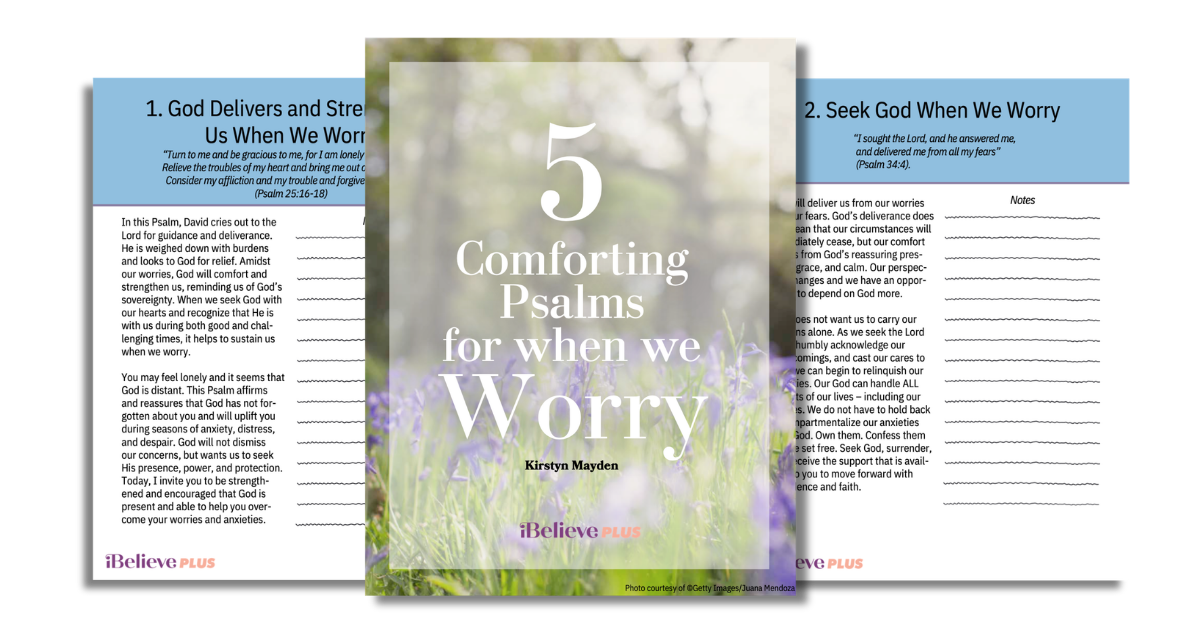
Feel like digging a little deeper? Here is a wonderful resource to meet you right where you are. 5 Comforting Psalms for When We Worry: A Guided Reflection Journal
Photo Credit: ©iStock/Getty Images Plus/kozorog
Carolyn Dale Newell is a best-selling author and certified speaker. She knows the bitter taste of suffering from blindness to chronic pain. Her passion is to encourage women to keep their eyes on Jesus and not their circumstances in her devotional, Embers of Endurance: Rising Above Chronic Pain and Illness. You can connect with Carolyn on her website and her women’s ministry group on Facebook.
Related Resource: The Blind Spots Hurting Your Relationships
In this episode of I Wish You Could Hear This, Shaunti and Jeff Feldhahn sit down with licensed professional counselor and bestselling author Debra Fileta for an honest and insightful conversation about the relationship blind spots many of us don’t realize we have. Together, they explore how emotional patterns, past wounds, and unrecognized habits can quietly shape the way we connect with others.
Debra shares practical wisdom on how to grow in self-awareness, strengthen communication, and take ownership of the ways we impact the people we love. Whether you’re dating, married, leading others, or simply wanting healthier relationships, this episode offers hope-filled tools to help you break unhealthy cycles and build deeper connection.
If you’ve ever wondered why relationships can feel harder than they should—or how to become a healthier version of yourself—this conversation is for you. Like what you hear? Be sure to follow I Wish You Could Hear This on Apple or Spotify so you never miss an episode!
Like what you hear? Be sure to follow I Wish You Could Hear This on Apple or Spotify so you never miss an episode!
Originally published Tuesday, 27 October 2026.
SHARE


