I was only a sophomore in high school, but I’ve never forgotten what I saw. As the news came to life, I was horrified by teen girls pummeling one another to a pulp. Fights had always bothered me, but this felt more personal, cruel, and harsh. I didn’t know the girls on the TV screen being pulled inches away from one another, but I thought of every fight I saw at my local high school and felt helpless.
It wasn’t just the headline that made my stomach drop; it was knowing that I lived in a world where violence like this existed, and there was nothing I could do to stop it. Of course, I didn’t grow up under a rock. Intellectually, I knew that tragedy, violence, disaster, and injustice were everywhere I turned. What bothered me was what I felt as a result. The sadness turned to fear, the fear turned to anger, the anger turned to confusion, the confusion turned to anxiety, and the anxiety turned to helplessness.
Key Points
- Biblical lament gives Christians a faithful way to bring grief, fear, anger, and difficult questions honestly to God while still holding onto hope.
- Scripture invites believers to bring anxiety directly to God through prayer rather than hiding, minimizing, or carrying it alone.
- Responding compassionately to painful news begins by remembering the real people behind every headline and treating their suffering with care.
- Healthy news boundaries allow Christians to stay informed without letting constant updates, scrolling, or commentary consume their peace.
- When the news feels overwhelming, believers can pause, pray, turn to Scripture, take wise action when possible, and entrust what they cannot control to God.
As my mom turned off the channel, I prayed about what to do. God led me to write an article, teach a devotional, and share my heart with my Bible study group. When I shared with my fellow students, however, I was met with laughter and mockery. To them, fights were funny. To them, fighting was just a part of life. But to me, I was responding because this situation hurt—not just me but others.
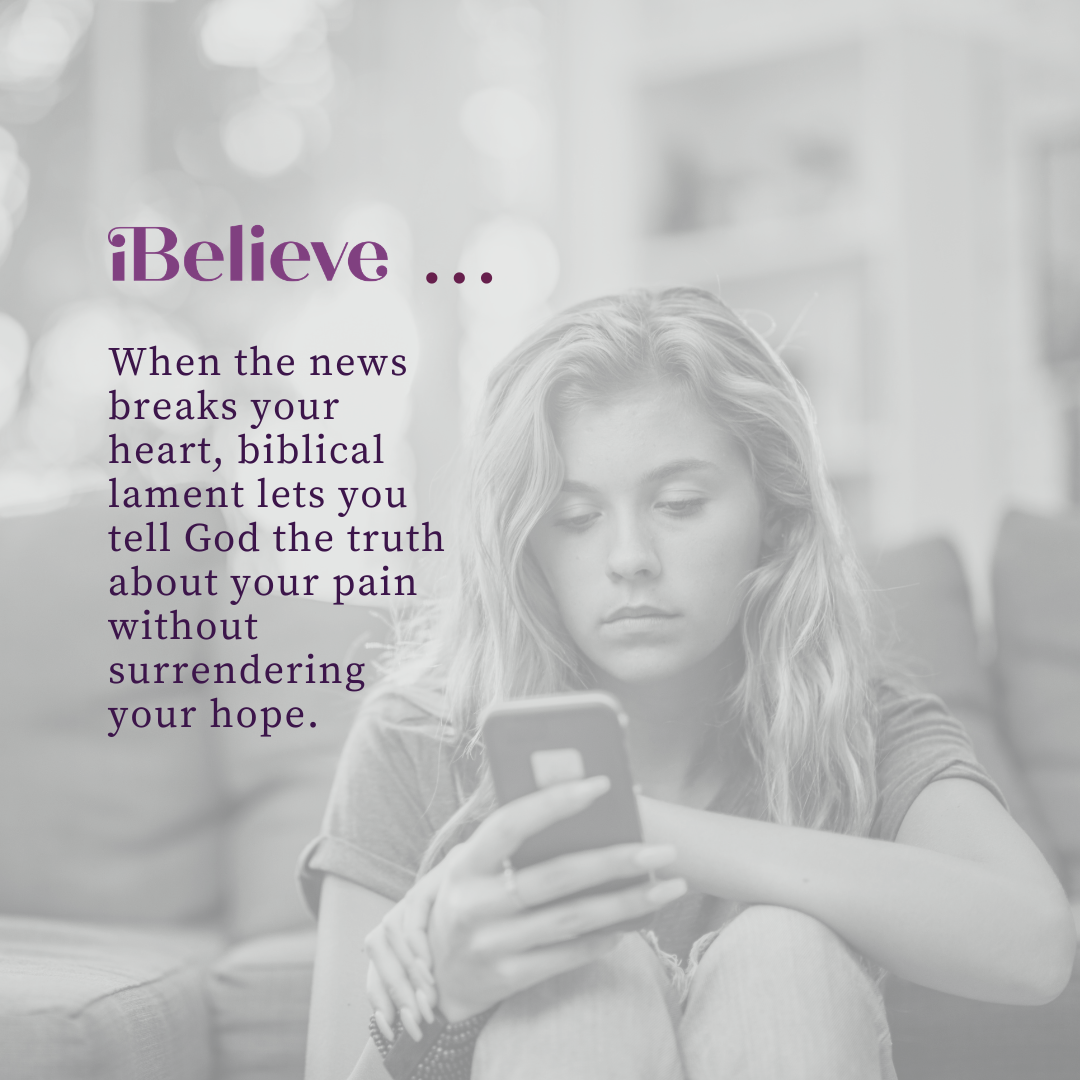
Even when others don’t understand us or our pain, Jesus does. In fact, the Bible is clear that this world we live in is broken. But instead of teaching us to pretend our world is perfect, Scripture shows us how to respond. And that response begins with lament. Biblical lament gives Christians a faithful way to name the pain of a broken world, bring it honestly to God, and hold grief and hope together without being consumed by either.
What Is Biblical Lament and Why Does It Matter?
Biblical lament is the practice of bringing our pain, questions, fears, and complaints honestly before God while continuing to trust Him. Though I was completely unaware of it at the time, lament is the process of bringing our hearts to God. It’s laying our pain, complaints, fear, and anxieties down at His feet.
In Psalm 13:1-2, we see an example of Lament: “How long, Lord? Will you forget me forever?” (NIV). This Psalm, and many others, are full of people asking hard questions. Just like us, they wanted to know:
- Why?
- How Long?
- Where are you?
- Will you help me?
- When will you rescue me?
These questions didn’t mean that they (or we) lacked faith; they mean that we’re humans just trying to understand things in a world too great for us to fully comprehend. While it might be tempting to push past or ignore your emotions, lament gives us permission to acknowledge that something isn’t quite right while still knowing God is with us. Even if it doesn’t feel like it, lament and despair are not synonymous. While lament says, “This hurts, and I need God,” despair says, “This hurts, and I will never have hope.” Thankfully, the process of biblical lament makes room for both. We can hold grief and hope simultaneously, not because we’re ignorant or avoiding bad things that happen, but because we’re learning to turn towards God in our pain.
How Can You Bring Fear and Anxiety to God?
Philippians 4:6–7 and 1 Peter 5:7 show that we can honestly bring our fear and anxiety to God because He cares for us. Instead of believing that hard emotions don’t matter to God, Philippians 4:6-7 shows us that we can bring our fear to Him instead of hiding it: “Do not be anxious about anything, but in every situation, by prayer and petition, with thanksgiving, present your requests to God. And the peace of God, which transcends all understanding, will guard your hearts and your minds in Christ Jesus” (NIV). 1 Peter 5:7 adds, “Cast all your anxiety on him because he cares for you” (NIV).
Together, these two Scriptures paint a beautiful picture of what it looks like to live in a posture of biblical lament. For example, instead of dwelling on my anxiety or pretending it doesn’t exist, I can bring it to God through prayer, petition, and praise. I can cast my burdens on Him because He cares for me—not because He’s mad at me for still struggling.
When we practice lament, our prayers don’t require us to eliminate our fears or fights before approaching God. We can bring the fear, anxiety, depression- you fill in the blank- itself. These Scriptures weren’t written to condemn us for being anxious or feeling heavy from holding hard things—they were written to show us what we can do when these difficult emotions rise. The peace we experience when we bring these requests and concerns to God isn’t always understanding why or getting the resolution to our problems. But it’s the reminder of who is with us when no one else understands. Bringing these struggles to God does not prevent us from seeking support as well. If anxiety, depression, disturbing thoughts, or reactions to traumatic news persist or interfere with daily life, consider speaking with a qualified healthcare or mental health professional.
Remember the People Behind the Headlines
A compassionate response to painful news begins by remembering that every headline involves real people made in God’s image. Though I left my Bible Study class that day feeling ashamed, embarrassed, and misunderstood, I remembered this: it’s okay to feel things deeply. And God grieves with what also grieves our hearts. In Romans 12:15, we see that rejoicing with those who rejoice and mourning with those who mourn are basic life skills. When we as humans experience hardship, we were created for others to mourn with and comfort us—not mock us for what we’re feeling.
While headlines, news, and even other people can turn human suffering into statistics, arguments, or the hottest trending content, we need to remember the people behind the action. In your own life, who can you think of who is hurting? Who is afraid or grieving? Who needs support in this season? Who needs someone to listen? Care? Love?
Instead of turning tragedy into a talking point, we should remember that every story we read or consume includes real people with real lives that deserve love, help, and care. And you don’t have to know everything to show that kind of compassion and care.
How Can Christians Set Healthy Boundaries with the News?
Christians can set healthy boundaries by remaining appropriately informed without consuming every article, comment, or update. The problem with living in a world full of constant news headlines is that something will always fight for our attention. But caring about those who are suffering, hurting, or being treated poorly doesn’t mean we have to read every article, engage with every comment, and consume every update. Sometimes, the best course of action is to learn, pray, and put down the phone. Allow God to tell you how to act or move, rather than constantly refreshing the feed and becoming increasingly overwhelmed. Stepping away doesn’t mean you don’t care—sometimes it’s the healthiest display of boundaries to show that you do.
Even when we feel responsible for every injustice that’s occurring in the world, we’re not. We serve a God who sees and knows all, even when we take a break or disengage from the news. Therefore, you don’t have to know it all. In John 14:27 and Isaiah 26:3, we see that Jesus gives us a peace that surpasses all understanding in this life. Peace is often characterized as the absence of struggle or indifference. But Jesus’ peace doesn’t require us to become numb, oblivious, or uncaring. It’s possible to care for and protect your sanity. To grieve and hold hope. To acknowledge fear and anger, but not let them consume you. Because biblical hope brings the pain to God, but trusts that God remains with us when the pain rages on.
A Simple Prayer When the News Feels Overwhelming
Biblical grief tells the truth about suffering while continuing to place hope in God. If you’re overwhelmed by the news today and don’t know what to say, use the words of Scripture:
- God, I don’t understand why- Psalm 13
- God, I feel broken- Psalm 34:18
- God, I give you my anxiety- 1 Peter 5:7
- God, I need you to provide- Matthew 6:11
These prayers aren’t about being polished, but about allowing your pain to point you towards Him. Today, before you consume any news or find yourself dwelling on it, pause, lament, pray, and release. Take a moment to breathe and soak in the Word before you open Instagram or start scrolling. Then, tell God the hurts in your heart. Next, pray for what’s bothering you. Finally, trust Him with what you can’t control.
How Can You Grieve Without Losing Hope?
The memory of that fight scene still shows up in my mind, but I no longer let the fear control me. Because I’ve learned that while the world is still hurting, I don’t have answers and can’t always permanently fix the situation, I can choose what to do with my grief. Together, we can learn to take our grief to the foot of the cross of the One who cares. The One who shows us we weren’t created to carry these burdens alone. The One who shows us we can grieve (and should), and it’s healthy to do so. But we can also declare that this is not the end of the story.
Frequently Asked Questions about Biblical Lament and the News
- What is biblical lament?
Biblical lament is an honest prayer that brings grief, fear, confusion, or injustice before God while continuing to appeal to His character and place hope in Him. - How can Christians pray when the news feels overwhelming?
Christians can tell God specifically what hurts, pray for the people affected, ask for wisdom about any action they should take, and release what they cannot control into His care. - Is it okay for Christians to take a break from the news?
Yes. Taking a break from news or social media can be a wise boundary when repeated exposure is increasing fear, anger, anxiety, or helplessness. Stepping away does not mean becoming indifferent to suffering. - How can I care about world events without losing my peace?
Stay appropriately informed, pray for the people involved, respond compassionately when action is possible, and resist carrying responsibility for every crisis. Christian peace allows us to care deeply without pretending we can control everything.
For Further Reading
- 10 Bible Verses to Read When Anxiety Strikes
- A Prayer For When You Hear Bad News
- 20 Psalms and Songs of Peace for a Worried Spirit
- 10 Promises God Has for the Overwhelmed and Anxious Soul
- 7 Things Christians Should Stop Saying in Times of Crisis
Photo Credit: ©Getty Images/Delmaine Donson