
Living in Montana has made me especially aware of the changing seasons. Winter feels long and quiet; spring is buzzing with life; summer fills the landscape with birds and adventure; and fall carries that hopeful feeling that something new is around the corner.
Creation moves through these rhythms faithfully every year, and our lives often follow similar patterns. As I walk with the Lord, I notice the spiritual parallels as the seasons change. Ecclesiastes reminds us that there is a time for everything: “For everything there is a season, and a time for every matter under heaven: a time to be born, and a time to die; a time to plant, and a time to pluck up what is planted; a time to kill, and a time to heal; a time to break down, and a time to build up; a time to weep, and a time to laugh; a time to mourn, and a time to dance” (3:1-4, ESV). We personally connect with each season the author describes.
Key Points
- Ecclesiastes reminds us that life unfolds in seasons, and each one can draw us into a deeper relationship with God.
- Winter seasons of grief, uncertainty, or spiritual dryness are not wasted; God may be growing deeper roots even when His work is difficult to see.
- Spring reminds us that renewal often begins quietly and that God brings new life according to His timing, not ours.
- Summer invites us to enjoy God’s goodness, practice gratitude, and receive seasons of joy as gifts rather than rushing past them.
- Fall teaches us to trust God through transition, remembering that His presence remains constant even when circumstances change.
Some seasons feel bright and full of life, while others feel quiet, uncertain, or even heavy. Sometimes we experience both extremes in the same week. But through every season—whether joyful or difficult—God invites us into the same thing: growing closer to Him. That invitation is not accidental. It is what we were created for. Spiritual seasons of life do not follow a predictable calendar, but each one can become a place where we learn to depend on God, receive His renewal, enjoy His gifts, or trust Him through change. If you’re like me, you prefer the bright and joyful seasons—but we can trust that even the undesirable seasons have a vital purpose.
How Can We Trust God in a Spiritual Winter?
A spiritual winter can feel quiet, barren, or heavy, but God’s apparent silence does not mean He has abandoned us. Winter is often when those harder seasons occur. Winter is dark, cold, still, and silent. The landscape is barren. The best parts of life seem to disappear. The lack of snow this year has left the trees especially bare, which makes the scenery feel even more bleak—and so it can be with life sometimes.
Spiritually, we experience winters too. And like my extra drab winter, it can feel exceptionally hopeless. Seasons of grief, anxiety, depression, uncertainty, or spiritual dryness. Depression and anxiety are not signs of spiritual failure. Prayer and Scripture can support us alongside counseling, medical care, and trusted community when symptoms persist or interfere with daily life. These dark seasons can make it feel as though life itself has come to a halt. Yet winter is not wasted, and there is always hope. Beneath the frozen ground, life is still present. Roots continue to grow, and the earth is quietly preparing for what will come next.
God often works in our lives the same way. In our toughest seasons, it appears God is doing nothing, but He’s always working, even in the unseen places (Isaiah 43:19). The more winters I experience, the more I realize that God may be using this season to slow us down, along with the rest of creation. This doesn’t mean we retreat into hibernation. It means we begin to see more clearly what actually matters. When life slows, we often find that the things drawing us closer to God—prayer, reflection, and time in His Word—become easier to notice and prioritize. And in that quiet, our faith often grows deeper roots than it ever could in the busier seasons of life.
The key is learning to surrender to the season and allow God to be God. We often resist what He is doing because His pace feels unfamiliar to us. Yet the rhythms of creation—the slow turning of the seasons—reveal how God often works in our lives. At times, it feels like we will never make it through winter. Yet winter never has the final word in nature, and it does not have the final word in our spiritual lives either.
How Does God Bring Renewal After a Difficult Season?
Spiritual renewal often begins quietly, long before we can see visible evidence of growth. After a long winter, the first signs of spring feel almost miraculous. Tiny buds appear on branches that looked lifeless just weeks before. My kids and I pay attention. We study the trees daily, and for a while, they still look mostly dead. Almost overnight, those same trees are suddenly full of lush green leaves, and we stand there in awe at how quickly life has returned. Spring reminds us that renewal often begins in small ways. A sudden transformation has been developing over the past weeks.
God often works in our spiritual lives the same way. Many times, I feel like I’m not progressing much in my spiritual transformation, but then God gives me a revealing moment where He shows me just how far down the path He has already brought me. Spring consistently reminds us that God is a God of renewal, bringing life where we once saw only barrenness. Yet no matter how much we long for spring, we cannot force it to arrive early. In the same way, we cannot rush the seasons God is unfolding in our spiritual lives (Ecclesiastes 3:11). But when spring finally does arrive, something in us comes alive with it. The air feels lighter, the colorful birds return, and every outdoor adventure feels vibrant again. There is something about those first warm days—when the sun thaws my bones and bright green leaves appear on branches—that fills me with effervescence and excitement. Sometimes it even makes me want to skip down the street.
When winter gives way to spring, we recognize that God was working all along. What once seemed like a lifeless season begins to take on new life and pulses with hope. Spring reminds us that God never abandons His work in us. He brings new life in His perfect time.
How Can We Enjoy God’s Goodness in a Joyful Season?
Joyful seasons invite us to receive God’s gifts with gratitude rather than rushing past them or feeling guilty for enjoying them. By the time summer arrives, the world is no longer waking up—it is in full swing. The trees are thriving, and there’s an earthy fragrance in the air that I adore. I’m not exactly sure what creates that scent, but my best guess is that the native trees and plants release it under the warmth of the sun. It’s my favorite smell. The birds are everywhere, and the long days seem to stretch endlessly into the evening.
Summer has become my favorite season. The mild Montana heat is wonderfully agreeable, and my girls are home. Some of my happiest moments are spent hiking or going on little outdoor adventures with them. We explore trails, notice the birds, and take in the beauty of the landscape that God has brought to life around us. Sometimes in the middle of a hike, I pause and take it all in—I feel a kind of joy that is hard to explain. It feels like the world is alive with the goodness of God.
“Oh, taste and see that the LORD is good! Blessed is the man who takes refuge in him!” - Psalm 34:8, ESV
Summer reminds me that walking with God is not only about enduring the difficult seasons or waiting for renewal. Sometimes it is about delighting in the life He has given us. God did not only create us to survive life, but to enjoy His creation and the people He has placed in it. We find this delight when we faithfully abide with Him. Delighting in the Lord might take some practice. If you’re anything like me, embracing God’s goodness can feel reckless because we are so used to working hard, but God calls us to these summer seasons as well.
There are seasons in our spiritual lives that feel like summer—times when our faith feels steady, joy comes easily, and gratitude flows naturally. In these moments, we are reminded that God is not only the One who sustains us through hardship. He is also our source of beauty and delight. Summer invites us to slow down long enough to savor these gifts and to thank the Giver who placed them in our lives.
How Can We Trust God Through Seasons of Change?
Seasons of change can hold beauty and grief at once, but God’s presence remains steady. The fall in Montana is short, but breathtaking. The weather is still pleasant, with just enough warmth lingering in the air, yet the landscape suddenly bursts into color. Golds, reds, and oranges fill your vision, and the beauty feels almost overwhelming. But fall also carries signs of change. Birds are migrating to prepare for winter—and now and then, you might spot one that thrills you.
One fall afternoon, I experienced one of my favorite birding moments. A Blue-headed Vireo passed through during migration, and God allowed me to see it. I was ecstatic! It reminded me that seasons of transition can be beautiful too. Even when things are changing—or something familiar is preparing to leave—God is still present. Change remains difficult, even when we know it is necessary. It’s okay to feel that discomfort. God’s invitation is to lean into it instead of away from it, though. Once again, Ecclesiastes reminds us that there’s always “a time to seek, and a time to lose” (3:6, ESV).
Every time I have leaned in, God has met me there—inside the discomfort. And it’s there that I feel peace. Sometimes the hardest part of embracing change is anticipating it. Other times, the hardest part is learning to live with the change itself. But the unchanging comfort of God is always there. (John 14:27)
What Is God Teaching You in This Season?
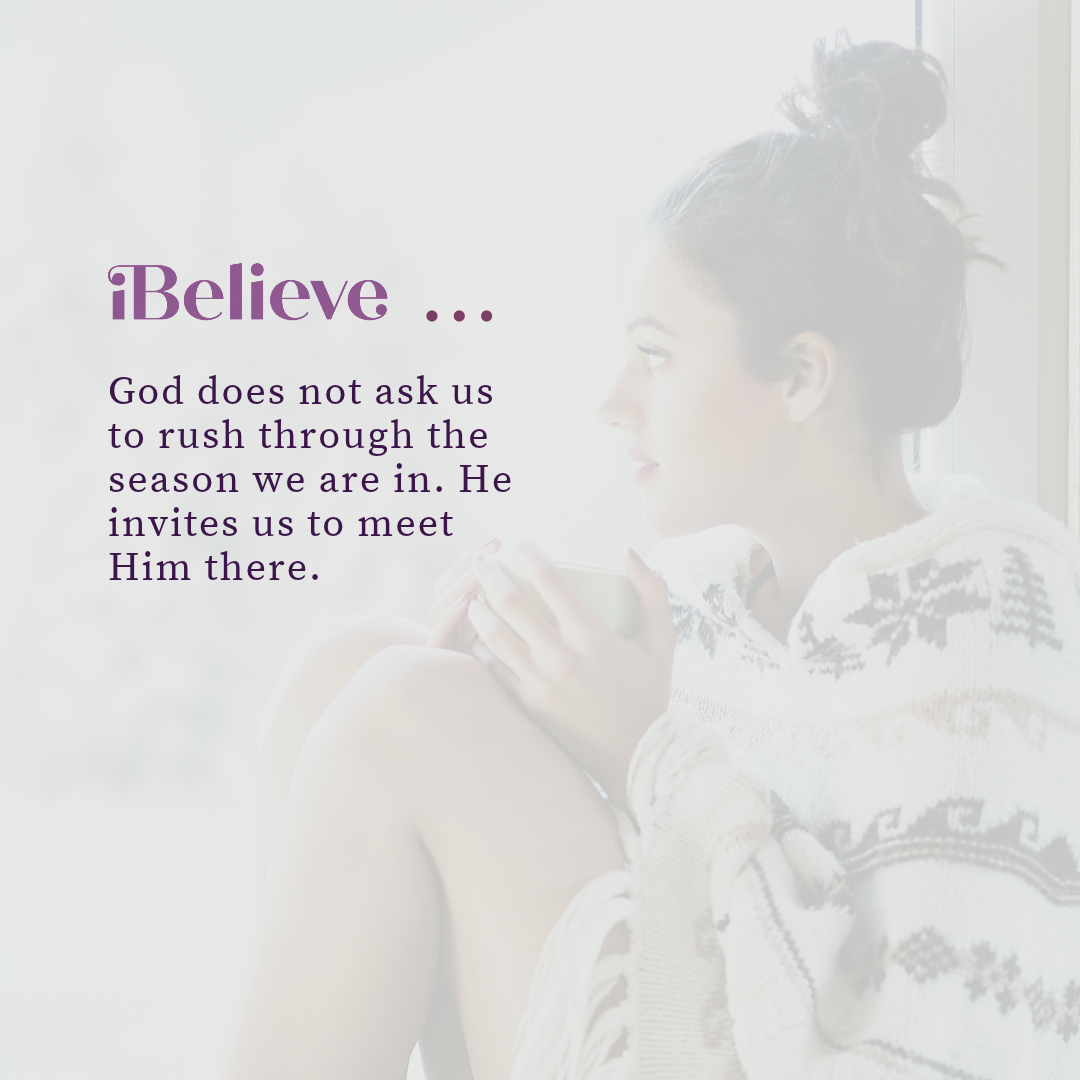
Whatever season you are experiencing, God invites you to meet Him there rather than rushing ahead or clinging to what is ending. Every season of life reveals something about the heart of God. Winter teaches us to depend on Him. Spring reminds us that He renews what once felt lifeless. Summer invites us to delight in His goodness. And fall teaches us to trust Him through change. Through every season, God is drawing us closer to Himself. No matter the season, His purpose remains the same. No season is wasted in the hands of God. And just like the seasons of creation, His work in our lives is never finished.
Frequently Asked Questions About Spiritual Seasons of Life
- What is a spiritual season?
- A spiritual season is a period marked by particular circumstances, emotions, or patterns of growth in a person’s relationship with God. Unlike the natural seasons, spiritual seasons do not always arrive in order or last for a predictable amount of time.
- Does a spiritual winter mean my faith is weak?
No. Grief, spiritual dryness, anxiety, and depression are not automatic signs of weak faith. A spiritual winter may require honest prayer, patient trust, supportive Christian community, and, when appropriate, care from a qualified mental health professional. - Does God cause every difficult season for a specific purpose?
Not every hardship should be interpreted as something God directly caused or as punishment for personal sin. We live in a broken world affected by human choices, suffering, and loss. Even so, no circumstance lies beyond God’s presence or His ability to bring redemption. - How can I trust God when a difficult season lasts longer than expected?
Focus on the next faithful step instead of trying to understand the entire season. Continue bringing your questions to God, remain connected to Scripture and trustworthy people, and allow lament to become part of your prayer rather than treating difficult emotions as evidence that God has left you.
For Further Reading
- 6 Spiritual Seasons of Life (and How to Flourish in Them)
- How I Learned to Navigate Seasons of Spiritual Dryness
- How to Trust God Through Life Changes
- 10 Bible Verses for New Beginnings
- Praising God in Every Season
Photo Credit: ©Getty Images/Wesley Davi
Vanessa Luu is a wife, mother, and faith-based writer. She speaks and writes to believers to encourage them to live authentically with God.
SHARE


