
For some reason, every year when I turn the clock back, it signals the start of seasonal depression. I’m more aware of it now and have learned to get ahead of it, but it’s still a yearly struggle. The interesting thing is, fall is my favorite time of year. I love sipping hot coffee on cool mornings wrapped in a cozy blanket. And where I live, the autumn colors are gorgeous! It can be difficult to understand why depression affects me.
Seasonal affective disorder, or SAD, is a form of depression with a recurring seasonal pattern, most often beginning during fall or winter. Its causes are not fully understood, but changes in daylight can affect sleep, mood, and the body’s daily rhythms. The National Institute of Mental Health distinguishes SAD from occasional “winter blues” and identifies it as a form of depression that may require treatment.
What about you? Do the shorter days and longer nights bring about feelings of unease? Do you find it harder to wake up in the mornings? Is there a sense of heaviness you can’t seem to shake? If you recognize the familiar pull of seasonal depression, these spiritual practices and practical steps can help you prepare for the season while also seeking the professional support you may need. Prayer, Scripture, healthy routines, and Christian community can provide meaningful support, but seasonal depression is not a spiritual failure. A doctor or licensed mental health professional can help you explore treatments such as psychotherapy, light therapy, or medication.
Key Points
- Seasonal depression can feel discouraging even during a favorite time of year, but getting ahead of it can help lessen its weight.
- Galatians 5:25 reminds believers to keep in step with the Spirit, trusting God’s gentle pace instead of rushing ahead or falling behind.
- Saying no to unnecessary commitments can create space for rest, connection, and healthier rhythms during emotionally heavy seasons.
- Praying Scripture aloud can help believers stand on God’s truth when sadness, fear, or heaviness begin to feel overwhelming.
- Small practical changes, such as reducing screen time, going outside, staying hydrated, and trying something new, can support a brighter season.
1. Slow Down and Keep in Step with God’s Spirit
“If we live by the Spirit, let us also keep in step with the Spirit.” - Galatians 5:25 ESV
I love the imagery of Galatians 5:25, which paints the picture of walking in step with the Holy Spirit. I picture myself on a treelined, sunlit path, hand-in-hand with the Lord. There’s no temptation to run ahead or lag. Only a gentle, easy pace is set by my Savior, who loves me and wants to spend time with me. Let this peaceful imagery help you get ahead of seasonal depression as you focus on matching God’s pace for your life. In the areas you’ve been racing ahead, stop and align yourself with His stride. And if you’ve been lagging, stifled by doubt or fear, reach for His hand to pull you along. Like a loving father who guides his child safely through crowded spaces, your Heavenly Father leads you through the cluttered spaces in your mind. With your eyes fixed on Him, let Him lead you by His gentle Spirit.
Lord,
Please slow my pace when I’m tempted to run ahead and pull me along when I’m lagging.
Draw me to Your side, for with You, there is perfect peace.
In Jesus’ name,
Amen.
Another Helpful Resource for Your Journey: A Prayer to Stay in Step with God’s Spirit
2. Reevaluate Commitments and Establish Healthy Boundaries
Reevaluating your commitments and removing unnecessary obligations may help reduce stress and support your well-being during seasons when depression tends to return. If you think about it, there are many things we’re capable of but not necessarily called by God to accomplish. When we’re overextended, it’s easy to want to shut down, which often adds to the heaviness of seasonal depression. We start making excuses, avoid social gatherings, and slip into self-isolation. This becomes an unhealthy pattern of overextending ourselves out of guilt, then protecting ourselves through isolation. Depression deepens as we let this cycle continue season after season.
It’s ok to say “no” to things, even good things. Having fewer commitments might be just what you need at this time. Pray for God’s guidance and be willing to give up things that are more burdensome than beneficial. Focus on small, intentional things you can do daily to connect with God and those you love.
Lord,
I feel guilty when I’m not busy enough, but then I get overwhelmed and want to shut down.
Please help me determine what you would like me to do. I surrender all my plans and activities,
trusting You to guide my commitments in the days ahead.
In Jesus’ name,
Amen.
Another Helpful Resource for Your Journey: Is it Your Calling or an Over-Commitment?
3. Bring Seasonal Depression Honestly to God in Prayer
Do your prayers seem shallow or generic these days? Do you feel like your communication with God is somehow blocked? If so, change the way you pray. The Scriptures breathe life into your prayers by powerfully proclaiming God’s truth. God’s promises can offer truth, comfort, and hope when depression weighs heavily on us. Scripture can bring truth, comfort, and hope when depression clouds our thinking. Reading and praying God’s Word can remain an important part of our care, alongside supportive relationships and appropriate treatment. God’s Word can sustain and strengthen you through difficult seasons by the anointed, holy Word of God.
Get ahead of seasonal depression by praying intentionally and powerfully. Start by agreeing with God and aligning yourself with Him. Say, “Lord, I align myself with You, the only True God.” Follow this prayer by rebuking the enemy's lies and asking the Lord for protection, wisdom, comfort, and strength.Here are a few powerful verses to pray aloud:
- “We demolish arguments and every pretension that sets itself up against the knowledge of God, and we take captive every thought to make it obedient to Christ.” (2 Corinthians 10:5)
- “Finally, be strong in the Lord and in his mighty power. Put on the full armor of God, so that you can take your stand against the devil’s schemes.” (Ephesians 6:10)
- “You are of God, little children, and have overcome them, because He who is in you is greater than he who is in the world.” (1 John 4:4 NKJV)
Resist letting seasonal depression halt your prayer life. Diligently spend time in prayer and petition, making your requests known to God. Let the Scriptures become your powerful weapon, helping you respond to sadness, heaviness, and fear with truth and hope.
Lord,
My prayers sometimes fall flat, and I’m not sure You hear me.
Raise me up to pray powerfully in Your name, the name above all names.
I hold fast to Your living Word today, trusting You to sustain me and lead me toward the care and support I need.
In Jesus’ mighty name,
Amen.
Another Helpful Resource for Your Journey: A Prayer When it Feels Like Depression Is Getting the Best of You
4. Make Practical Changes That Support Your Mental Health
We often get stuck in a rut because it’s how we’ve always done things. This can make an emotionally difficult season harder when we continue in unhealthy cycles and unproductive routines. Making practical changes can make a real difference in how we feel, and it’s important to make changes before symptoms intensify before we lose motivation. Here’s a list of small, practical steps to take:
- Reduce your screen time, especially before bed.
- Spend time outdoors in daylight when possible.
- Stay hydrated and notice whether caffeine affects your sleep, anxiety, or mood.
- Be mindful of what you’re watching or listening to.
- Schedule regular time with supportive people you trust.
- Try something new like painting, sculpting, or writing.
Avoid the autumn blues by changing your routine and implementing things that bring joy. Make the people in your life a priority and find ways to spend quality time together. Getting ahead of seasonal depression will require you to smay involve adjusting familiar routines, so don’t be afraid to try new things. There are both practical and spiritual things you can do to minimize the effects of depression and move through the season with greater support and intention.
5. Make a Seasonal Depression Plan with a Professional
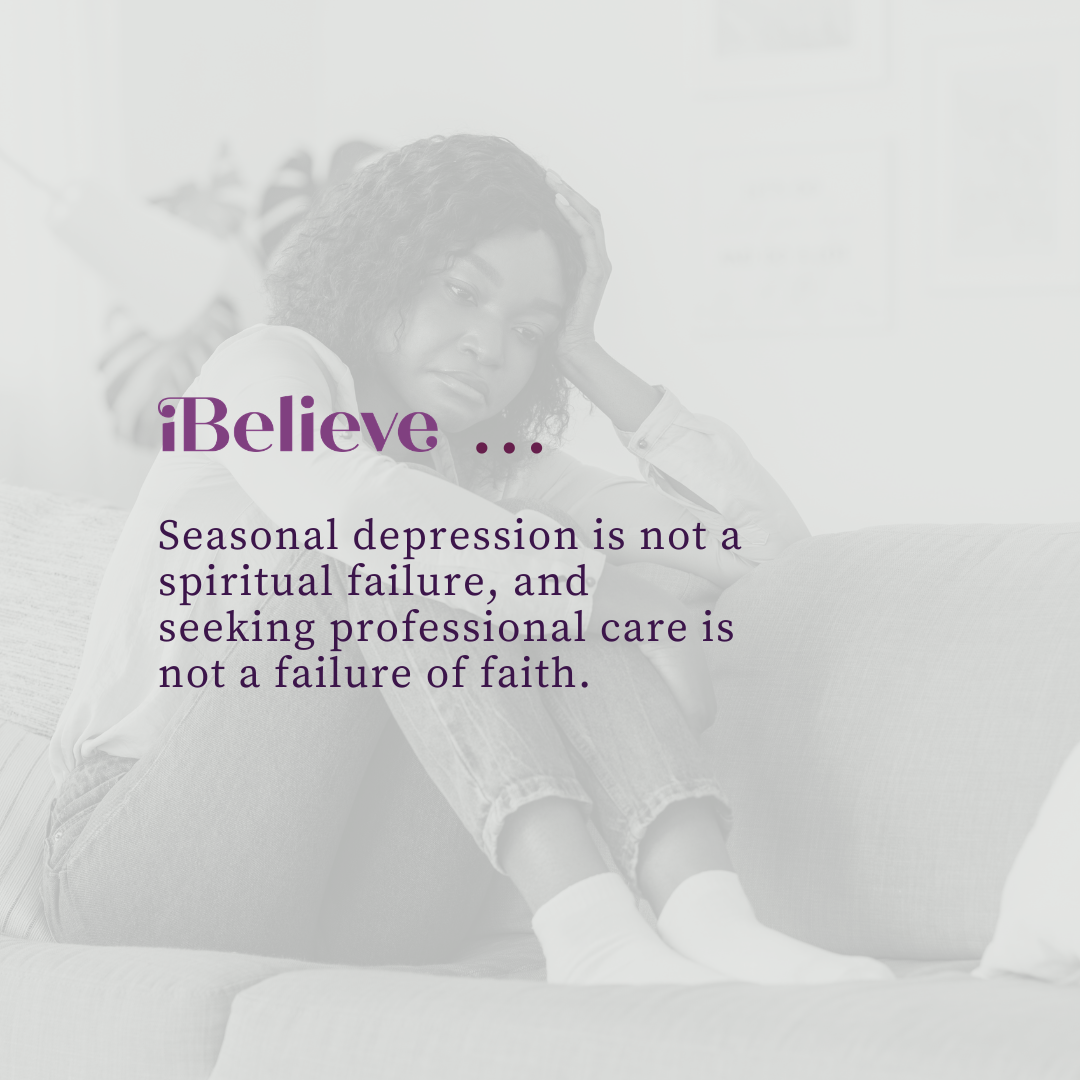
Because seasonal depression often follows a predictable pattern, talk with a healthcare provider before symptoms intensify. Together, you can discuss your history, possible treatments, and when to begin them. Seeking professional help is a wise form of care, not a failure of faith. NIMH notes that people with a history of SAD may benefit from beginning treatment before their usual symptoms start, under the guidance of a healthcare provider.
Lord,
You know how easy it is for me to fall into the same old habits that only fuel seasonal depression.
Please motivate me to make the necessary changes to enjoy this beautiful season with You and those I love.
In Jesus’ name,
Amen.
Frequently Asked Questions about Seasonal Depression
- What is seasonal depression?
Seasonal depression, formally called seasonal affective disorder, is a type of depression with symptoms that return during a particular season. Winter-pattern SAD commonly begins in fall or early winter and improves during spring or summer. - How can I prepare for seasonal depression?
Track when symptoms usually begin and discuss a preventive plan with a healthcare provider. Helpful support may include psychotherapy, light therapy, prescribed medication, regular sleep, daylight exposure, movement, relationships, prayer, and Scripture. - Can Christians experience seasonal depression?
Yes. Seasonal depression is not evidence of weak faith or insufficient prayer. Christians can rely on God’s presence while also receiving appropriate medical and mental health treatment. - When should I seek professional help for seasonal depression?
Seek help when low mood, exhaustion, withdrawal, sleep changes, hopelessness, or loss of interest interferes with daily life. If you are experiencing thoughts of suicide or are in emotional crisis in the United States, call or text 988 for immediate support.
For Further Reading
- Preparing for Seasonal Depression
- 3 Tips for Beating Seasonal Depression
- Harvesting Hope Amid Mental Health Struggles
- How to Find Hope in the Midst of Winter Blues
- 28 Powerful Bible Verses about Depression to Uplift You
Photo Credit: ©GettyImages/max-kegfire


