
From toddlers to pre-teens, teens, young adults, adults, and elders, we all have something in common: we all experience waiting seasons on this side of Heaven. From unanswered prayers to grocery store lines, drive-through waits, or diagnosis results, there’s a common frustration that comes with waiting. I don’t think anyone really enjoys it. But what the Bible says about waiting on God might just surprise you. Waiting on God does not mean doing nothing; it means trusting Him enough to pray, obey, remain faithful, and keep hope alive while His timing unfolds. How can we learn to wait on God when life feels stuck?
Key Points
- Waiting on God can feel hard because it often exposes our desire for control, certainty, and quick answers.
- Scripture shows both the danger of rushing ahead of God and the faithfulness He forms in those who wait well.
- Waiting on God is not passive; it means praying honestly, obeying faithfully, and trusting Him even when we do not understand.
- Remembering God’s past faithfulness can strengthen us when current answers feel delayed or unclear.
- God uses waiting seasons to renew our strength, deepen our hope, and remind us that His preparation is never wasted.
Why Is Waiting on God So Hard?
As human beings, we find waiting hard because we desire control. That six-letter word holds much power over those who struggle to find it. We fear missing out, we dread uncertainty, and our anxiety rises. But waiting also feels hard because we live in a culture that operates much faster than it was ever intended to. According to Psychology Today, the Agony of Waiting results when we combine two challenging states of mind: Not knowing what’s next, and not being able to do much about it. This lack of control is what Medium says irks our perception of time. Pair that with uncertainty, impatience, and equity, and you’ve got an unhappy person. And we aren’t the only ones.
What Does the Bible Say about Waiting on God?
The Bible teaches that waiting on God is an active posture of trust, prayer, obedience, patience, and hope in His timing. In the Scriptures, many forefathers didn’t like waiting either. When God’s promise didn’t come quickly enough, Sarah and Abraham took matters into their own hands.
“Sarai was Abram’s wife, but she did not have any children. She had an Egyptian slave named Hagar. Sarai told Abram, “The Lord has not allowed me to have children, so sleep with my slave. Maybe she can have a son, and I will accept him as my own.” Abram did what Sarai said. So after living ten years in the land of Canaan, Sarai gave her Egyptian slave to Abram as a second wife." Genesis 16:1-3,
When King Saul was frustrated with Samuel, his impatience cost him his dynasty.
“Saul waited for Samuel for seven days, the amount of time he had been told by Samuel to wait. But the prophet did not come to Gilgal, and the people began to slip away. A few more days and Saul would have no army left, so he decided to take matters into his own hands.” 1 Samuel 13:8, The Voice
Even King David gave in to impulse with Bathsheba rather than asking the Lord what to do.
“Late one afternoon, after his midday rest, David got out of bed and was walking on the roof of the palace. As he looked out over the city, he noticed a woman of unusual beauty taking a bath. 3 He sent someone to find out who she was, and he was told, “She is Bathsheba, the daughter of Eliam and the wife of Uriah the Hittite.” - 2 Samuel 11:2-3, NLT
On the flip side, however, many figures waited well. Joseph had a bright future, but had to endure suffering and hardship before he would receive what he’d been promised.
“You intended to harm me, but God intended it for good to accomplish what is now being done, the saving of many lives.” - Genesis 50:20
Job lost everything and still waited on God to redeem him.
“Then Job replied to the Lord: I know that you can do all things; no purpose of yours can be thwarted. You asked, ‘Who is this that obscures my plans without knowledge?’ Surely I spoke of things I did not understand, things too wonderful for me to know.” - Job 42:1-3
Anna the Prophetess was a widow, but was confident she’d see the Lord before she died (and she did).
“Anna, a prophet, was also there in the Temple. She was the daughter of Phanuel from the tribe of Asher, and she was very old. Her husband died when they had been married only seven years. Then she lived as a widow to the age of eighty-four. She never left the Temple but stayed there day and night, worshiping God with fasting and prayer. She came along just as Simeon was talking with Mary and Joseph, and she began praising God. She talked about the child to everyone who had been waiting expectantly for God to rescue Jerusalem.” - Luke 236-38, NLT
In each of these examples, the waiting wasn’t easy, but we can see that it wasn’t wasted. We may not understand it in the moment, but God’s preparation is always a process. From Abraham to Joseph or David, growth happens in hidden seasons. Uncomfortable places. Spaces we’d rather skip altogether. But learning to wait well is a process. In his article, Learning to Wait Well, author and pastor Bob Kauflin explains waiting as a source of surprising praise:
“Our joy and gladness come from our Lord more than from specific answers to our prayers. Because we love his salvation and experience his goodness again and again as a result of it. He is always writing new chapters, new stories, giving us fresh reasons to declare his steadfast love and faithfulness. And as we wait through trials in a God-honoring way, rejoicing and praising through the pain and heartache, those around us learn more about the God who is righteous, merciful, and good.”
What Does Waiting on God Actually Mean?
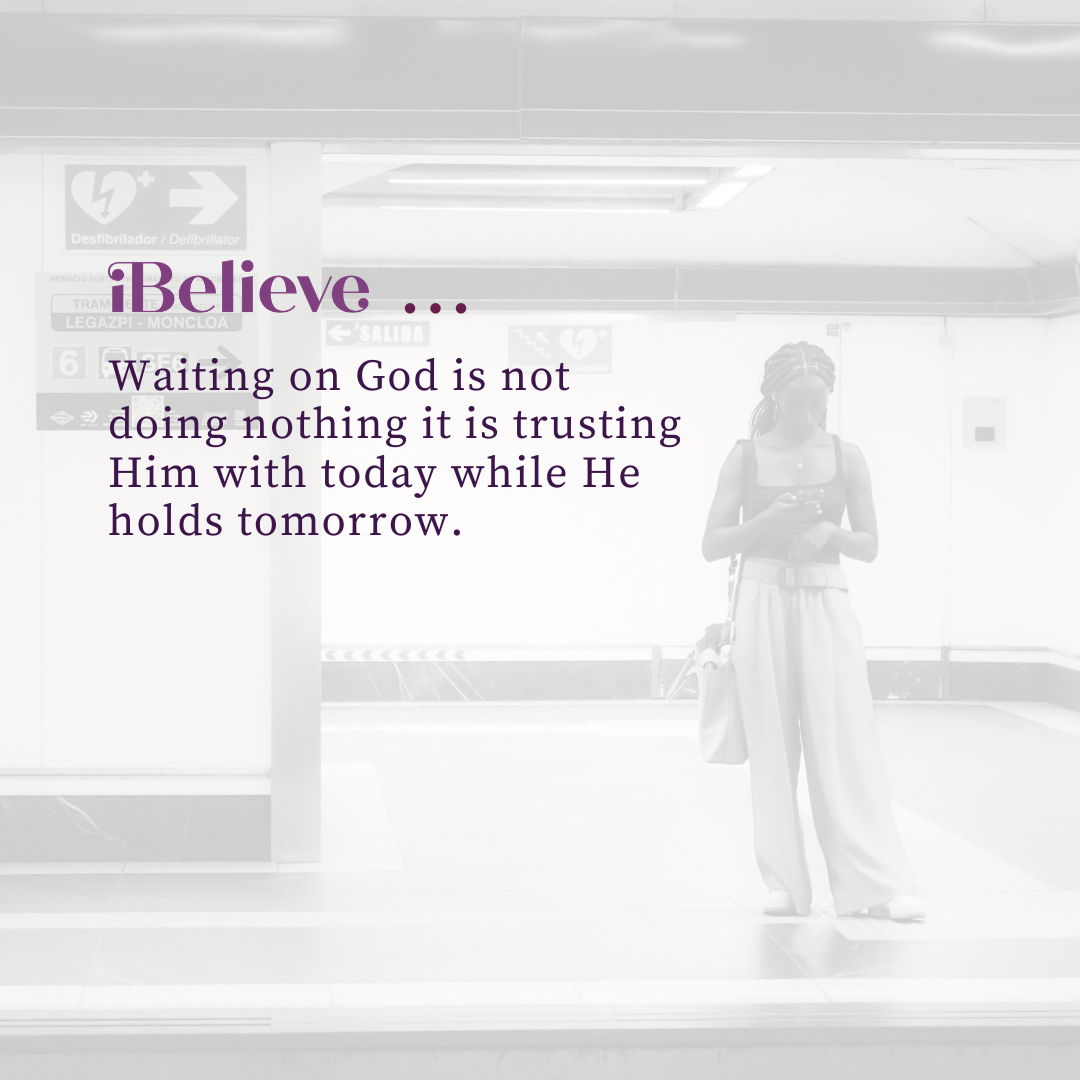
Contrary to popular belief, waiting on God doesn’t mean inactivity, but rather active trust. It’s praying, obeying, and remaining faithful even when we don’t understand. Waiting is an active state of patience, confidence, trust, and eager expectation. And here are four things you can implement to help you wait well:
- Pray honestly.- Pray without pressure. God doesn’t expect you to feel or think a certain way, but He does ask you to come as you are.
- Stay faithful in today’s tasks.- Remember that today is enough for today. Do what you can and be faithful in the little things.
- Remember God’s faithfulness.- Spend some time mulling over who God is and what He’s done for you in the past. Even in hard times, this can propel you through.
- Build spiritual habits.- Work on small and intentional habits you can implement over time. These don’t have to be monumental things, but they do need to be things you can work on and commit to consistently.
As you pray, talk openly and honestly with the Lord. Hold nothing back. Stay faithful to what you’re called to do today. One day at a time, remember that your actions matter. Then, recall His past faithfulness. Spend time thinking about how God has answered you before, and allow that to encourage you in the future. Finally, practice building spiritual habits. Pray, read Scripture, and engage in the Word creatively. Ask God to help you wait well.
God Is Working While You Wait
The promise for those who wait is what Isaiah 40:31 describes as renewed strength, hope, and endurance.
“But those who hope in the Lord will renew their strength. They will soar on wings like eagles; they will run and not grow weary, they will walk and not be faint” (NIV).
It’s never easy, but it’s a promise to those who hold onto His hope even when they can’t see it. God is working in the waiting, and the waiting is never wasted. How will you allow God to use your waiting today?
Frequently Asked Questions about Waiting on God
- What does waiting on God mean?
Waiting on God means trusting His character and timing while continuing to pray, obey, remain faithful, and take the next right step He gives you. - Does waiting on God mean doing nothing?
No. Waiting on God is not passive. It often includes prayer, obedience, wise action, spiritual habits, and faithfulness in today’s responsibilities. - Why does waiting on God feel so hard?
Waiting feels hard because we do not know what will happen next and cannot control the outcome. Spiritually, waiting exposes where we are tempted to trust our timing more than God’s. - What Bible verse helps when I am waiting on God?
Isaiah 40:31 is a strong verse for waiting because it promises that those who hope in the Lord will renew their strength and endure without growing weary. - How can I wait well when life feels stuck?
You can wait well by praying honestly, staying faithful in today’s tasks, remembering God’s past faithfulness, building spiritual habits, and asking God for strength to trust Him one day at a time.
For Further Reading
- How to Wait on the Lord
- 10 Things to Do While You’re Waiting on God
- Why God’s Delays Are Not Denials
- How I Learned to Wait on God's Timing
- 5 Ways to Thrive While Waiting on God’s Timing
Photo Credit: ©Getty Images/franckreporter


